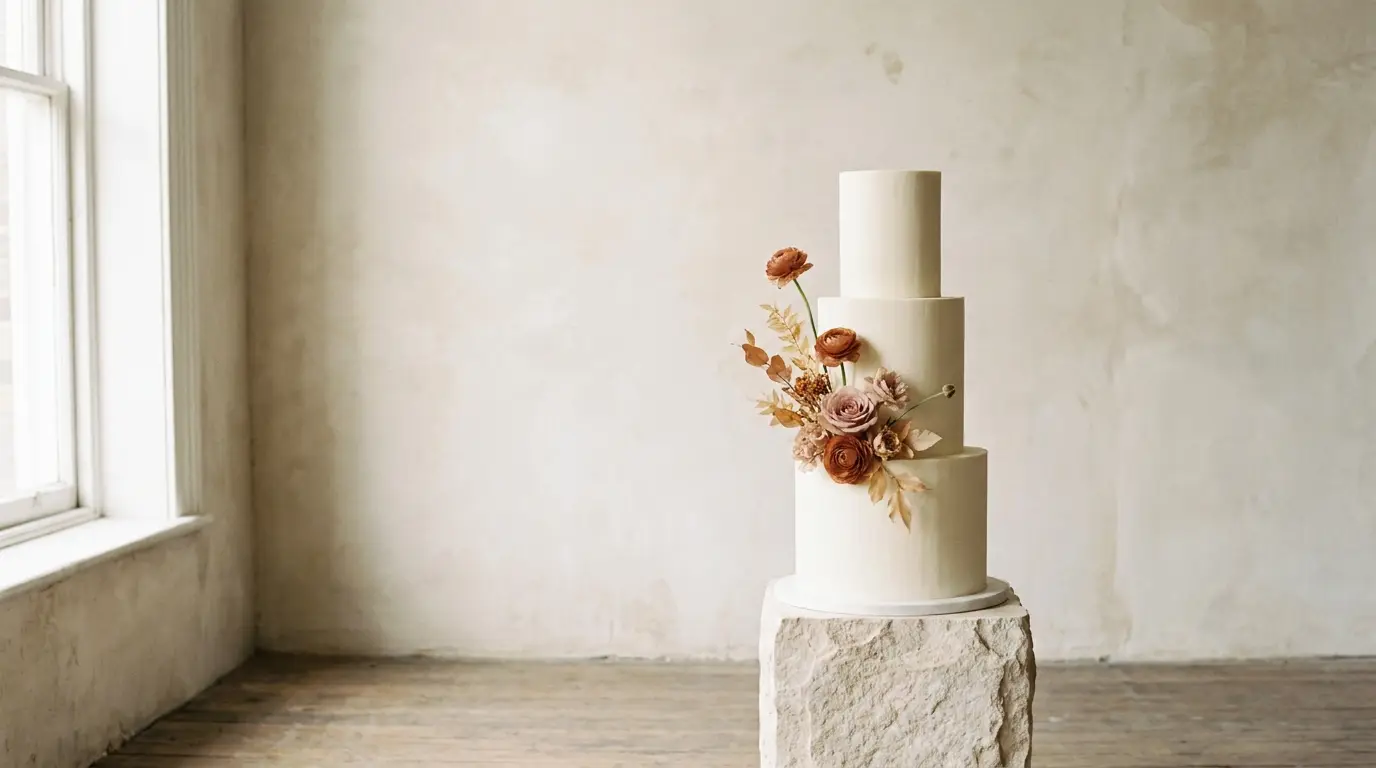
A custom wedding cake runs $4 to $8 a serving, so 100 guests puts the cake itself between $400 and $800. The wedding cake budget rarely fails there, though. It fails on the lines around the cake: delivery, on-site assembly, and a cutting fee that appears only when the venue did not bake it. Price all three before the tasting, because the cheapest quote is not always the cheapest cake.
Per-serving pricing, and what a serving is
Bakers do not price cakes; they price servings. A wedding serving is a narrow slice, roughly one by two inches and four inches tall, and the quote is the serving price times the count you order. That count is a decision, not a headcount: dessert follows dinner and an open bar, and a share of guests never take a plate, which is why many bakers suggest ordering for 80 to 90% of the final count.
| Cake | Typical price per serving |
|---|---|
| Grocery or warehouse bakery | $1 – $3 |
| Kitchen sheet cake | $1 – $3 |
| Custom, buttercream finish | $4 – $6 |
| Custom, fondant finish | $5 – $8 |
| Sculpted or heavy sugar work | $8 – $12+ |
The math stays small until the multipliers stack. A buttercream cake for 120 ordered servings at $5 is $600. The same cake in fondant with a tier of handmade sugar flowers can quote at $9 a serving, $1,080, before anyone has charged to move or cut it.
What drives the price
Tiers
Height is engineering. Each added tier brings dowels, boards and structural work, and a three-tier cake serving 100 to 130 costs more per serving than one wide single tier serving the same number. Couples buying tiers are buying the silhouette in the photos, which is a legitimate purchase as long as it is a knowing one. Faux tiers, decorated foam under real icing, buy the silhouette for less.
Fondant versus buttercream
Fondant, the rolled sugar sheet that gives a cake its architectural finish, typically adds $1 to $2 per serving over buttercream because it is slower work layered on top of a buttercream base. Buttercream alone now holds sharp edges well enough that the choice is aesthetic more than structural. In summer heat, fondant travels better; buttercream venues need refrigeration until the reveal.
Decoration and flavor
Handmade sugar flowers are modeled petal by petal and priced accordingly; a cake dressed in them can carry more decoration cost than cake. Flavor, by contrast, barely moves the quote. Standard fillings and sponges price the same, with only liquor-soaked or specialty-ingredient builds adding a premium. Spending on the outside and standardizing the inside is the normal shape of a cake invoice.
Delivery and assembly
Tiered cakes travel in pieces and are stacked and finished at the venue, which is why delivery is a skilled-labor line of $50 to $150, not a courier fee. The charge scales with distance and setup complexity. A cake that must be assembled, chilled and timed against a summer afternoon is part of the day-of logistics, and the baker's setup window belongs on the venue timeline.
Tastings and deposits
Tastings commonly run $25 to $75 and many bakeries credit the fee against a booking, which makes the second and third tastings the only ones that really cost anything. Booking takes a deposit, often half, with the balance and the final serving count due two to three weeks out. The count locks earlier than the RSVP stragglers do, so order to the confirmed number, not the invited one.
The cutting-fee trap
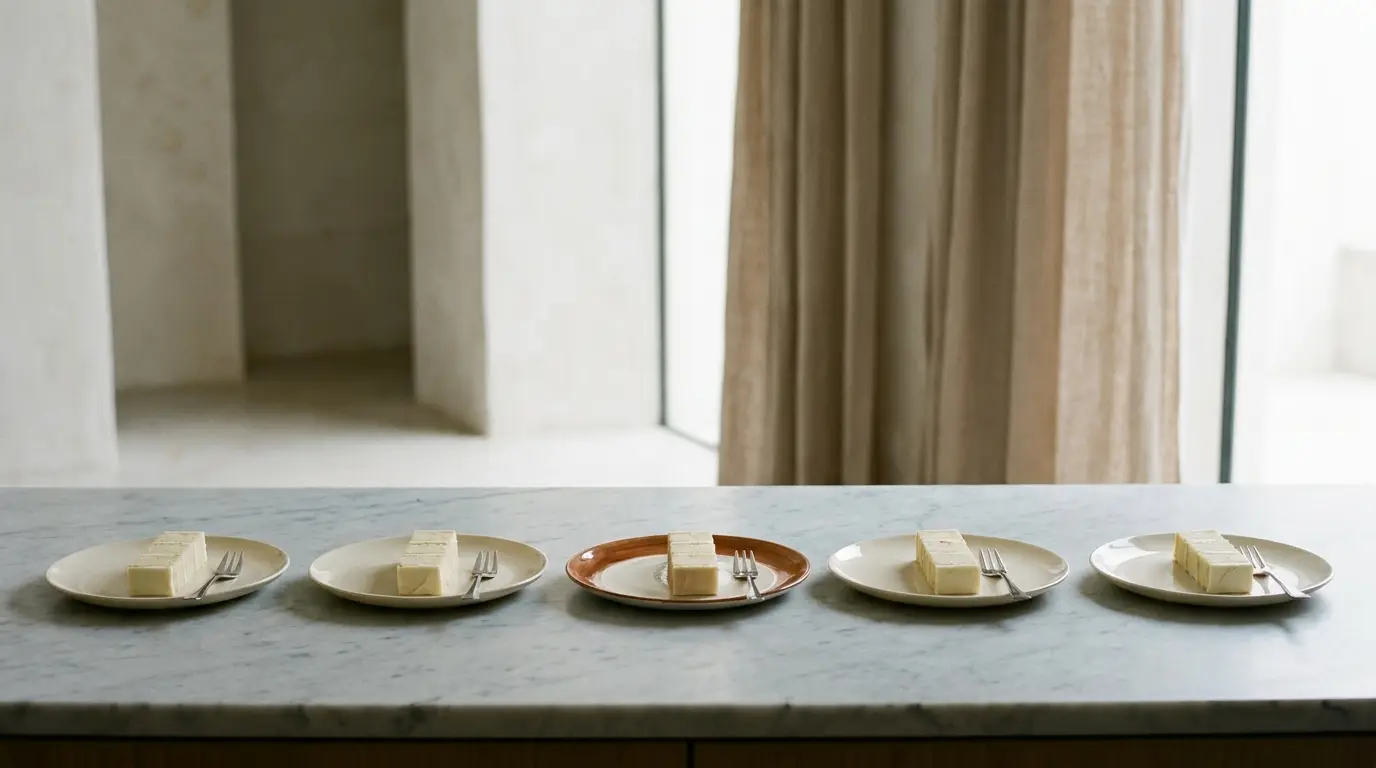
The largest hidden line in a cake budget is charged by the venue, not the baker. When the cake comes from an outside bakery, many venues and caterers charge a cutting fee of $1.50 to $8 per slice to cut, plate and serve it. It is one of the fees that rarely appear in a first quote, and on 120 guests it adds $180 to $960 to a cake you thought you had already paid for.
The fee changes which cake is cheapest. A $600 outside cake plus a $3 cutting fee on 120 guests is $960 all-in. A venue's own cake at $7 a serving is $840, no fee, no delivery line. Whenever the venue bakes, or the caterer includes cutting, the comparison has to be run all-in rather than quote against quote.
The rule lives in the catering contract, so it is knowable before booking. Venues with exclusive or in-house catering are where the fee concentrates, and Nashville venue listings state their catering rules up front, which is the stage at which the cutting fee is still negotiable.
Where cake sits in the budget
Cake is a small line that behaves like a per-head line. Against the 2025 median wedding spend of $18,231, a $600 cake is just over 3% of the wedding, and even a $1,000 build with fees stays under 6%. Seeing where the cake line sits among the rest is mostly a reminder not to fight the budget battle here while the venue and catering lines go unexamined.
One quiet variable is tax. Texas, for example, does not tax bakery items sold by a qualifying bakery without plates or utensils, while the same dessert billed through a caterer lands in the taxed, service-charged food and beverage total. The identical $600 of cake can cost $600 from the bakery counter and over $750 inside a catering contract at a 22% service charge plus tax.
Serving the same crowd for less
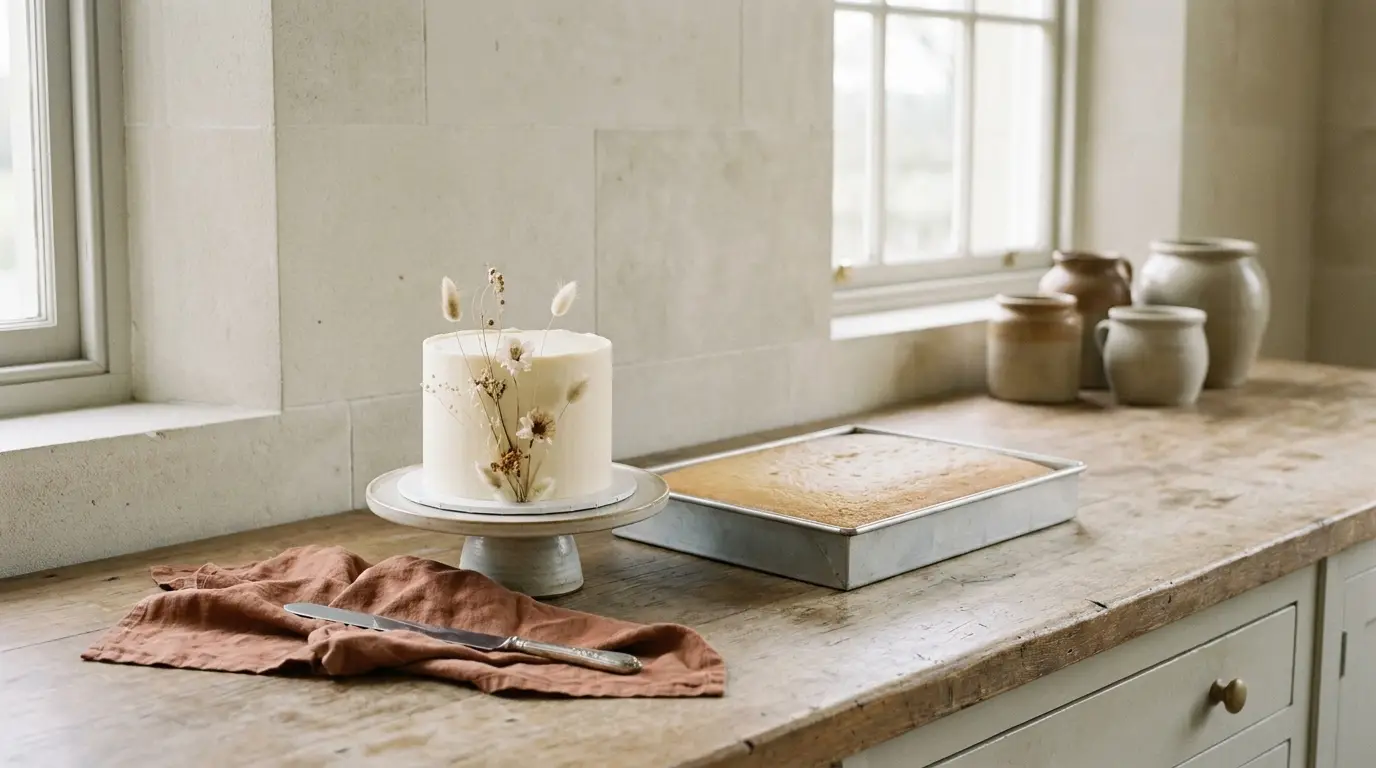
The display-plus-sheet strategy is the standard move. A one- or two-tier decorated cake covers the photos and the cutting moment, and an undecorated kitchen sheet cake in the same flavors, at $1 to $3 a serving, feeds the room. Guests receive an identical plate. On 120 guests, a 40-serving display cake plus an 80-serving sheet commonly saves $250 to $400 against a full four-tier build.
Decoration has a cheaper supplier too. Fresh flowers from the florist already dressing the tables cost $50 to $150 on a cake and replace hours of sugar work, one of several reasons to price the cake and the flower budget beside it as one styling decision. Skipping a separate groom's cake, a second fully decorated cake by another name, keeps a three-figure line off the same page.
Key takeaways
- Budget per serving, not per cake: $4 to $8 for custom work, times a count around 80 to 90% of guests.
- Pay for tiers, fondant and sugar work knowingly; flavor is close to free.
- Add delivery and assembly, $50 to $150, to every outside quote.
- Run the cutting-fee math before choosing the bakery: all-in versus all-in, never quote versus quote.
- Serve a display tier plus a sheet cake when the count is large.
Frequently asked questions
How much should we budget for a wedding cake?
Plan on $4 to $8 per serving for a custom cake, which puts most weddings between $400 and $1,000 including delivery. Fondant, added tiers and sugar flowers push the top of that range. Add the venue's cutting fee if the cake comes from an outside bakery.
How much does a wedding cake for 100 guests cost?
Ordering 80 to 90 servings for 100 guests, a buttercream cake at $4 to $6 a serving runs $320 to $540, and fondant at $5 to $8 runs $400 to $720. Delivery adds $50 to $150. A display tier with a kitchen sheet cake serves the same crowd for meaningfully less.
Why are wedding cakes so expensive?
Because they are structural, decorated and delivered by hand. Tiers need internal engineering, fondant and sugar flowers are hours of skilled work, and the cake is assembled and finished on-site. The ingredients are the cheap part; a wedding cake is mostly labor priced by the serving.
What is a cake-cutting fee?
A cake-cutting fee is a per-slice charge, typically $1.50 to $8, that venues and caterers apply when the cake comes from an outside bakery. It covers cutting, plating, forks and service. On 120 guests it adds $180 to $960, so ask for it in writing before booking the bakery.
Can we avoid the cutting fee?
Sometimes. Venues that bake in-house or caterers that include cake service charge no fee, and some venues will waive or reduce it during contract negotiation, the only stage where the request carries any weight. Asking before signing costs nothing; discovering the fee on the banquet event order costs the full rate.
Is fondant more expensive than buttercream?
Yes, typically $1 to $2 more per serving, because fondant is rolled and applied over a finished buttercream base, adding labor to every tier. Modern buttercream holds clean edges well, so the choice is mostly visual. Fondant earns its premium in summer heat, where it travels and stands better.
Do you need one cake serving per guest?
No. After dinner and a bar, a share of guests skip dessert, so many bakers suggest ordering for 80 to 90% of the final count. Wedding servings are also narrow by design. Couples keeping the top tier for the first anniversary should tell the baker so it is boxed, not cut.
How much is wedding cake delivery?
Typically $50 to $150, scaling with distance and setup complexity. Tiered cakes travel in pieces and are stacked, finished and sometimes chilled at the venue, so the fee buys skilled labor and timing rather than a courier run. Confirm the baker's setup window appears on the venue's day-of schedule.
Is a sheet cake cheaper than a tiered wedding cake?
Substantially. Kitchen sheet cakes run $1 to $3 a serving against $4 to $8 for decorated tiers, in the same flavors from the same baker. The standard strategy pairs a small display cake for the cutting moment with sheet cakes served from the kitchen, and guests see no difference on the plate.
When should we order the wedding cake?
Four to six months before the wedding suits most bakeries, with popular studios booking peak-season Saturdays earlier. Schedule the tasting after the venue and caterer are set, because their cutting-fee and dessert rules change what is worth ordering. Final counts are usually due two to three weeks out.