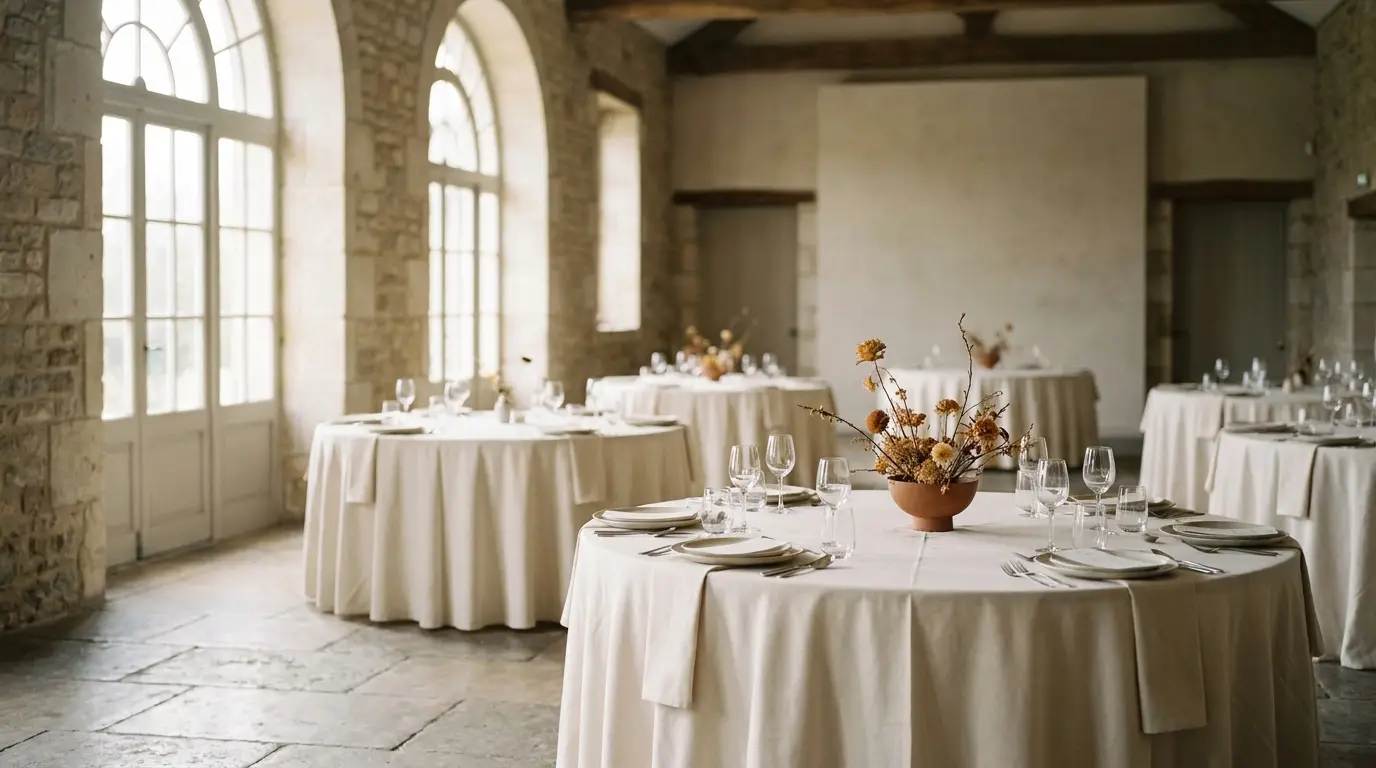
Choosing a wedding venue is the largest single purchase in the budget, and the industry sells it by tour: string lights on, tables staged, a coordinator mentioning that your date is moving fast. Decide inside that room and the prettiest space wins. The actual decision runs on five numbers, and every one of them is available before you visit.
Set the venue's share before you look at photos
The venue line typically takes 25 to 30% of the whole budget, $8,573 on average nationally. Against The Wedding Report's 2025 median US spend of $18,231, that is a working ceiling of roughly $4,600 to $5,500. A larger budget scales the dollars, not the percentage.
The ceiling covers venue cost, not site fee. A $3,000 room that forces $4,000 of rentals and a locked caterer is not cheaper than a $6,500 room with tables, chairs and a kitchen in the fee. Every comparison in the search is all-in against all-in, or it is decoration.
The venue also sets the sequence for everything else. One signature fixes the date, the guest ceiling and often the caterer, which is why the venue sits near the top of the planning checklist with most other bookings queued behind it.
Get the seated number in writing
Capacity gets quoted three ways: standing for a cocktail crowd, seated in ceremony rows, and seated at dinner tables. Brochures lead with the biggest. The number that governs your guest list is the smallest: seated at tables with the dance floor, band or buffet in the same room.
Ask for that number in writing, for your layout. A room that holds 200 for a standing reception seats far fewer for dinner once 60-inch rounds, pulled-out chairs and service lanes take their share of the floor.
If the ceremony and reception share one room, the flip is part of capacity too. The room has to be reset from rows to tables while guests stand somewhere else with drinks, which takes staff, a second space and the better part of an hour. A venue that quotes its ceremony capacity without naming where guests wait during the flip has answered a different question.
Capacity also includes who can reach the room. Businesses open to the public must give guests with disabilities equal access under the ADA, and the practical test is a walk: parking to seat, seat to restroom, ceremony space to reception space. A venue that has thought about it answers in one sentence.
Published listings shorten this whole stage. Nashville venue listings state capacity and fees on every entry, so the two facts that kill most shortlists surface before the tour instead of after it.
Price what the venue owns, not the room
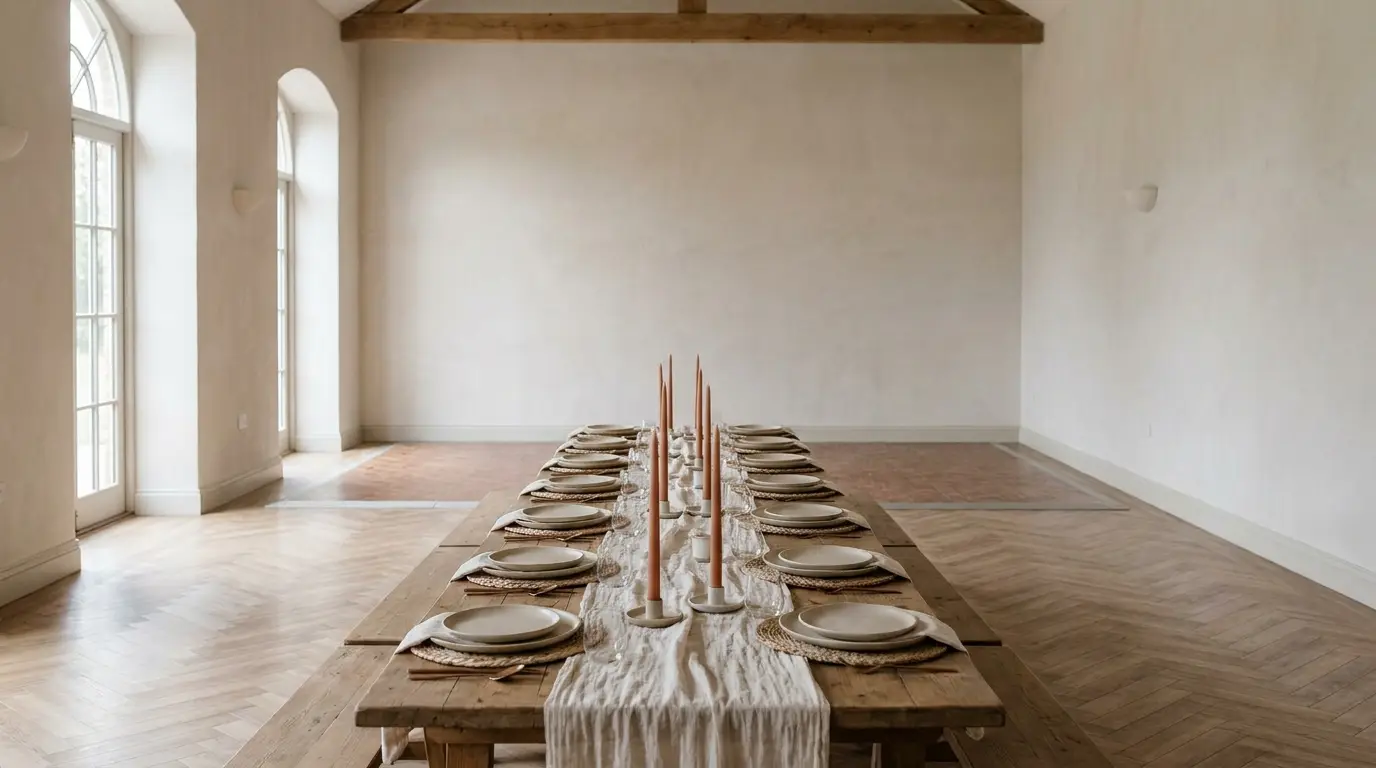
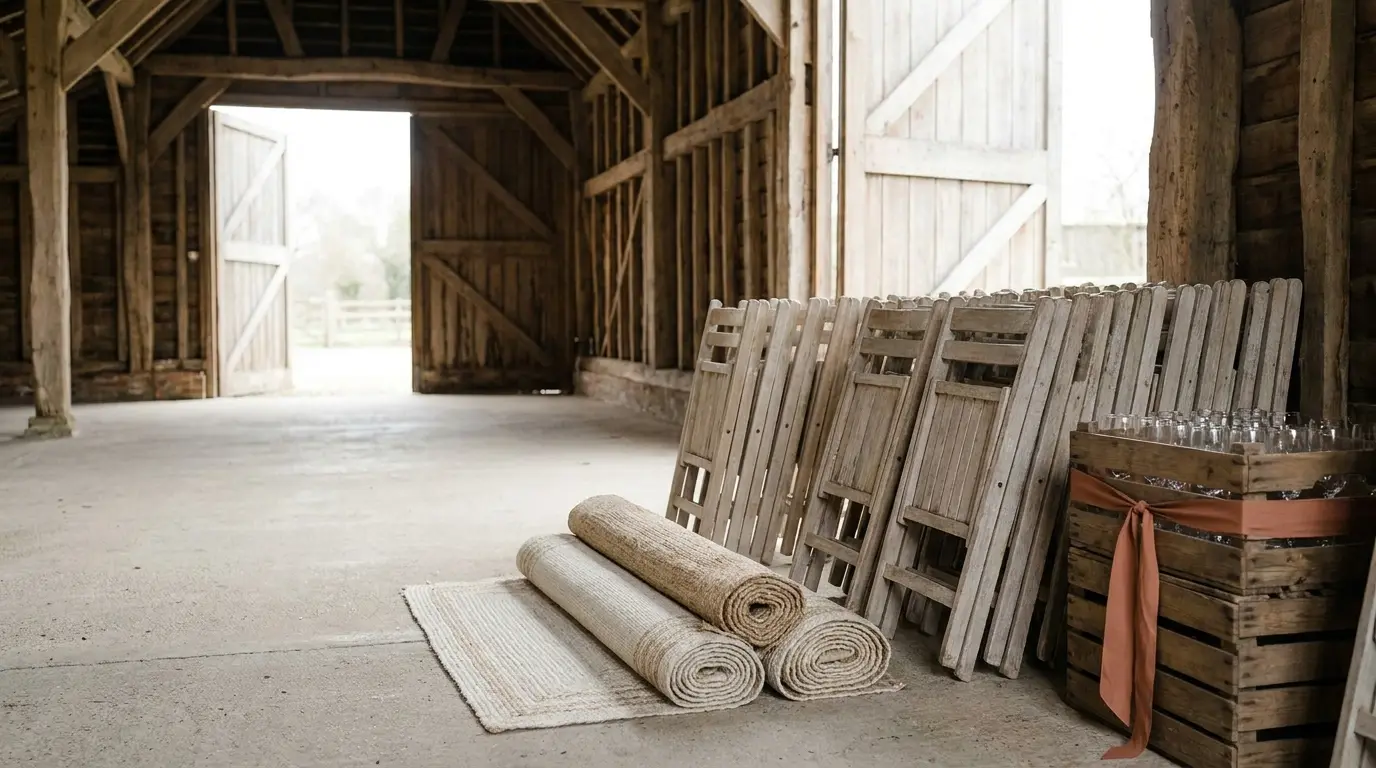
A hotel or estate that owns tables, chairs, linens, a kitchen, parking and staff has folded most of the event's infrastructure into its fee. A barn, warehouse or field has not, and everything the venue does not own arrives on a truck with an invoice.
| If the venue does not own it | It comes back as |
|---|---|
| Tables, chairs, linens | A rental contract plus delivery and pickup fees |
| A kitchen | Caterer prep surcharges or a mobile kitchen |
| Power | A generator sized to the band's rider |
| Restrooms | A trailer, delivered and serviced |
| Setup and cleanup staff | Labor lines on the catering or rental bill |
| Rain cover | A tent, frequently the largest single rental |
None of this makes the blank-box venue wrong; some of the best rooms in every market own nothing but the walls. It makes the site fee unreadable on its own. Price the truck list for each venue on the shortlist and add it to the fee before comparing anything.
Included deserves the same scrutiny as owned. Included chairs can mean the ceremony's white resin folders rather than dinner seats, included linens can stop at one color in one length, and an included sound system can be a ceremony speaker rather than anything a band can use. The owned-inventory list, in writing, settles what the fee actually covers.
Exclusive catering is a pricing decision
Many venues tie the room to an in-house kitchen or a short approved-caterer list. The economics are plain: exclusivity removes the competing bid. Typical wedding catering runs $70 to $150 a head before bar; inside an exclusive arrangement, the venue's number is the number, and it is about as negotiable as the weather.
The second mechanism is the food-and-beverage minimum: a floor you spend with the kitchen regardless of attendance. A $10,000 minimum across 80 guests is $125 a head before a menu exists. Minimums usually peak on in-season Saturdays and fall midweek and off-season, which is one more way the date is a price.
Bar structure moves the same math. A package bar bills per head for a set list, a consumption bar bills what actually gets poured, and corkage converts bottles you bought into a per-bottle fee. None of the three is automatically cheaper; each prices differently at your guest count, and the venue can model all of them before you ever tour.
Get one written quote that states per-head, minimum, service charge and bar structure together. The service charge is a percentage added on top of the bill, and it is not the tip. A quote that leaves it out is not a quote.
Curfews decide how much wedding you get
A venue rental is a block of hours with a hard stop. Amplified-music curfews come from local noise rules or the neighbors' patience, and they are not negotiable at 9:40 on the night. An 8-hour rental ending at 10 p.m. is a different product from a 15-hour run to midnight, whatever the two rooms look like.
Run the arithmetic on any listing. Doors at 4 p.m. against a 10 p.m. curfew is six guest-facing hours; subtract a 30-minute ceremony, a cocktail hour and a two-hour dinner service, and dancing gets about two and a half. The same math against a midnight license is a different evening at the same fee.
Read the hours as a timeline: load-in before guests, the guest-facing hours, teardown after. Vendors bill against the same clock, and an early curfew compresses dinner, toasts and dancing into whatever is left. The curfew belongs on the shortlist spreadsheet next to fee and capacity, not in the discovery pile after a tour.
Shortlist on paper, then tour to verify
The method compresses to five columns per venue: all-in cost against the 25 to 30% ceiling, seated capacity against the guest list, what is owned against what is rented, catering rules with the per-head, and hours with the curfew. All-in means one number: site fee, plus forced rentals, plus catering at your head count with the service charge, on the same date. A venue that fails on paper does not get cheaper in person. It gets more persuasive.
Build the longlist from sources that state numbers, browsing venues by market rather than by mood board, and bring 2 or 3 candidate dates instead of one: the date carries its own economics of season and day of week, and availability is half the negotiation.
Then tour a maximum of 3. By that point the visit is verification: the guest path, the light, the sound of the room half full, and the questions a shortlisted venue should answer before any contract. If the numbers change on the tour, that is information too.
Key takeaways
- Cap all venue-driven cost at 25 to 30% of the budget; compare all-in against all-in, never site fee against site fee.
- Plan against seated-with-dance-floor capacity, in writing, for your layout.
- Whatever the venue does not own, you rent. Price the truck list before comparing fees.
- Exclusive catering means no competing bid: get per-head, minimum, service charge and bar in one written quote.
- Curfew and load-in hours are part of the price. Put them on the spreadsheet.
- Tour at most 3 venues, and only to verify what the numbers already said.
Frequently asked questions
How much should a wedding venue cost?
Plan on the venue taking 25 to 30% of the total budget, $8,573 on average nationally. On the 2025 median US spend of $18,231, that is roughly $4,600 to $5,500. Count forced rentals, exclusive catering and service charges inside that share, not on top of it.
How many wedding venues should you tour?
Three or fewer, chosen from a paper shortlist that already cleared budget, capacity, catering and curfew. Touring eight venues does not produce a better decision; it produces prettier confusion and a lost month. The tour verifies, and the spreadsheet decides.
How far in advance should you book a wedding venue?
A year or more ahead for an in-season Saturday in most markets, and popular rooms book further out. Off-season and weekday dates open on shorter notice. The venue is the first booking because the date, the guest ceiling and often the caterer are fixed by it.
What does a venue site fee usually include?
Always the space and a block of hours; sometimes tables, chairs, linens, parking and staff; occasionally nothing else at all. Ask for the owned-inventory list in writing. Whatever is missing from it returns as a rental line, which is why two very different site fees can produce the same final bill.
What is a food and beverage minimum?
A spending floor the venue's kitchen collects regardless of your headcount. A $10,000 minimum across 80 guests works out to $125 a head before a menu is chosen. Minimums are usually highest on peak Saturdays and lower midweek and off-season, so the same room carries different floors on different dates.
What does exclusive catering at a venue mean?
The venue requires its own kitchen or one from a short approved list, so no outside caterer can bid. Typical wedding catering runs $70 to $150 a head before bar nationally, but inside an exclusive arrangement the venue's quote is the market. Get it in writing before signing the room.
What does venue capacity actually mean?
Usually the standing number, which is the largest of three. Seated in ceremony rows is smaller, and seated at dinner tables with a dance floor is smaller still. Plan the guest list against that last number, confirmed in writing for your specific layout.
Do wedding venues have curfews?
Many do, driven by local noise rules or residential neighbors, and outdoor venues carry the strictest ones. The curfew sets when amplified music stops and often when guests must leave, which shapes the whole evening timeline. Ask for curfew, load-in and teardown hours in writing before booking.
Are all-inclusive venues cheaper than blank-slate venues?
Neither is cheaper by category. All-inclusive folds rentals, catering and staff into one invoice; a blank slate unbundles them across contracts you control. The only honest comparison is the all-in number for your guest count on your date, venue by venue.
How do you check whether a wedding venue is accessible?
Walk the path a guest with limited mobility would take: parking to seat, seat to restroom, ceremony to reception. Venues open to the public owe guests equal access under the ADA, and a well-run one can describe its step-free route in a sentence. Vague answers on the phone predict stairs on the day.